

Southwest Minnesota Drug Defense Attorney
You May Be Scared About What Comes Next. You Do Not Have to Face This Alone.
You may be struggling with addiction, facing a charge of selling drugs, or afraid of going to jail. You may be wondering how to tell your family, whether you will lose your job, or how this could change your life.
You do not have to know where to begin before you call me. I will listen to what happened and what worries you most. Then I will review the evidence and talk with you about what we can challenge, what your options are, and what each could mean for you and your family.
A drug case is rarely just about what was found.
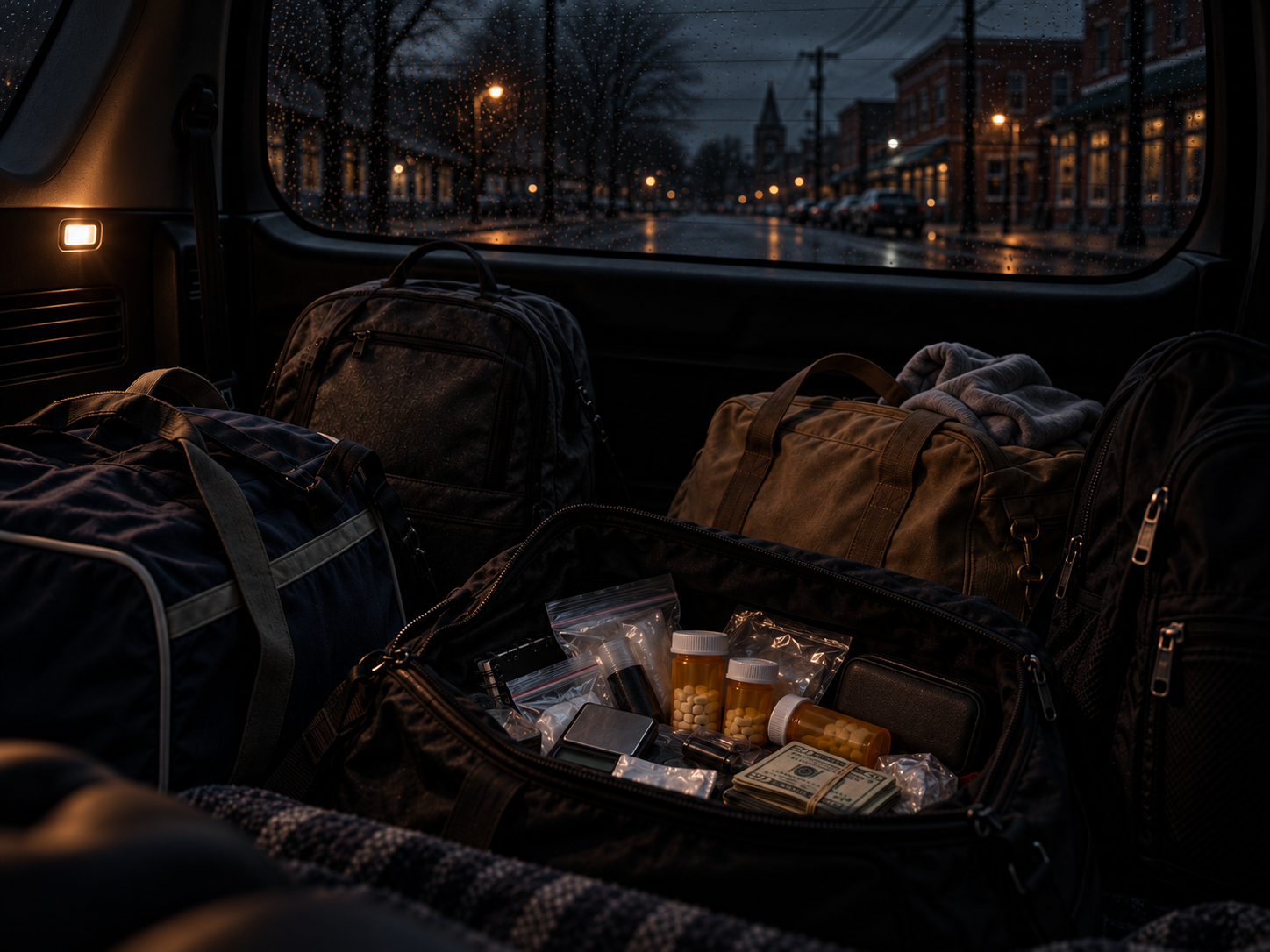
Drugs may have been found in your car, your home, or somewhere you share with other people. You may disagree with the claim that they were yours. You may acknowledge possessing them but dispute an accusation of selling. Or you may know the evidence against you is strong and be most concerned about what happens next.
I review how the evidence was obtained and whether it supports the charge. That includes looking at the search, the testing, and the reasons police connected you to the drugs or alleged a sale.
We will talk about what happened from your perspective and how that compares with the evidence. I will explain what I think we can challenge, what concerns me, and what your options are. I also want to understand what you are dealing with outside the case, because your job, your family, and any struggles with addiction matter when we discuss what to do.

What is considered a Drug Crime in Minnesota?
Understanding Minnesota Drug Charges
Minnesota's controlled substance laws are found primarily in Chapter 152. They cover unlawful possession, possession with intent to sell, sale, manufacture, importation, certain prescription-related conduct, and other controlled-substance offenses. The degree and potential penalty can depend on the substance involved, the amount, whether the state alleges possession or sale, aggravating circumstances, and in some cases prior qualifying convictions.
Minnesota's definition of a drug 'sale' is broader than an exchange for money. It includes giving away, delivering, exchanging, distributing, manufacturing, offering or agreeing to do those things, and possessing a controlled substance with intent to do them. Cannabis is governed in part by separate possession and sale statutes and is not treated exactly the same as other controlled substances.
The charge listed in the complaint is the starting point. We will talk through what the state has to prove, what the evidence shows, and how that compares with your account of what happened.
The Science & The Law: Where a Drug Case Can Be Challenged
Challenging the Stop, Search & Seizure
Why did police stop or detain you, and what legal basis did they have for the search?
If police say you consented, what did you actually agree to?
If there was a warrant, what information supported it, how current was that information, and did officers stay within its limits?
If an informant or controlled buy was involved, what do the reports and recordings show about what happened?
Challenging Possession & Intent to Sell
Where were the drugs found, and who else had access to that location?
What evidence shows you knew the drugs were there and had control over them?
If you are accused of selling, what are police relying on: packaging, money, messages, quantity, statements, or something else?
What is your explanation for those details, and is there other information that supports it?
Challenging Drug Testing & Forensic Evidence
Was there only a field test, or did a laboratory also test the substance?
What was tested, and do the laboratory records support the reported substance and weight?
Are there gaps or inconsistencies in how the evidence was collected, labeled, stored, or transferred?
If DNA was found on an item, what does that result tell us about your connection to the drugs, and what does it leave unanswered?

How a Drug Defense Works
What Working Together Looks Like
The Initial Intake Conversation
When you reach out, you will speak directly with me. When possible, I review the publicly available information about your case before we talk so the conversation can focus on what matters most to you. I often begin by asking: "What is the most important question on your mind right now?" Your concerns help guide where we start - whether that is what was found, how the search happened, what the charge means, what your family is worried about, or what comes next in court.
Clear, Predictable Flat Fees
Uncertainty is hard enough without wondering what every phone call or email will cost. I work on a transparent flat-fee basis for the defense phase. You will know my legal fee upfront. The defense phase covers my time reviewing evidence, investigating the case, communicating with you, negotiating, preparing motions, conducting legal research, appearing at motion hearings, traveling when necessary, and taking the time to understand your concerns and answer your questions. If the case proceeds to trial, there is a separate, transparent trial fee. No surprise hourly bills.
Legal and Forensic Evidence Review
Once retained, I obtain and review the reports, recordings, search warrants, laboratory materials, and other evidence in your case. If something is missing or needs a closer look, I follow up. When testing is important to the charge, that may include obtaining the underlying laboratory records and data.
As I review the evidence, we will discuss how it compares with what you remember. You may recognize someone in a recording, explain a message, or point out something the reports leave out. I will explain what I find, what I think we can challenge, and where I see problems for the defense. When the search needs to be challenged, the evidence does not support possession or sale, or the laboratory work does not hold up, I am prepared to litigate those issues and try the case when that is the right decision for you.
We will also discuss any offer from the prosecutor, what accepting it would mean, and the risks of continuing to fight the charge. I will give you my assessment and recommendation, and we will take time to discuss your questions. If you are struggling with addiction or have concerns about treatment, work, or caring for your family, I want us to talk about those things too.
Further Information on Minnesota Drug Charges
Frequently Asked Questions

-
Minnesota drug penalties depend on the specific offense, the controlled substance, the amount, whether the case involves possession or sale, aggravating circumstances, and sometimes prior qualifying convictions. Under Minnesota's general controlled-substance framework, a felony fifth-degree offense can carry up to five years in prison and a $10,000 fine; fourth degree up to 15 years and $100,000; third degree up to 20 years and $250,000; second degree up to 25 years and $500,000; and first degree up to 30 years and $1,000,000. A narrow category of first-time, very low-amount fifth-degree possession is a gross misdemeanor rather than a felony. Aggravated first-degree offenses, subsequent controlled-substance convictions, and other mandatory-sentencing provisions can change the sentencing framework. Cannabis offenses have separate classifications and penalties. These are statutory maximums, not predictions of the sentence in a particular case.
-
Yes. Minnesota prosecutors can rely on constructive possession when drugs are not found directly on a person. In those cases, the location of the drugs, who had access to the area, what you knew, and what evidence shows control can become central issues. Drugs found in a shared vehicle, home, bedroom, or container do not automatically answer those questions simply because you were nearby.
-
Minnesota uses a broad definition. A 'sale' can include selling, giving away, delivering, exchanging, distributing, or manufacturing a controlled substance. It also includes offering or agreeing to do those things and possessing a controlled substance with intent to do them. That means a sale charge does not always require proof that money changed hands.
-
Potentially. If evidence was obtained through a stop, detention, search, or seizure that violated constitutional protections, the defense may ask the court to suppress that evidence. Whether suppression applies depends on the facts - including why police acted, whether there was a warrant or a recognized exception to the warrant requirement, what any consent actually covered, and how the search was carried out.
-
A positive field test is a preliminary result. I check whether laboratory testing followed, what was tested, and whether the laboratory confirmed the field-test result.
-
That is evidence we need to take seriously. I review what was tested and, when appropriate, the underlying records supporting the result. We also need to consider what the report does not answer, including who possessed the substance and whether it was intended for sale.
-
Yes. Law enforcement may use DNA from drug packaging, containers, scales, firearms, or other items to argue that a person was connected to the evidence. But detecting a person's DNA on an object does not, by itself, establish when the DNA was deposited, how it got there, or whether that person possessed or controlled the drugs at the time alleged. When DNA is part of a drug case, I look at the underlying DNA data, the location and context of the sample, mixture interpretation when applicable, possible transfer or prior contact, and what the result can - and cannot - establish about possession or control.
-
Those facts can be used as circumstantial evidence, but they still have to be examined in context. The amount and type of substance, how it was packaged, who owned or controlled the surrounding items, what messages or statements actually say, and whether money has an innocent explanation are all things I look at. We will discuss your explanation and whether records, witnesses, or other evidence could help support it.
-
Yes. Drug investigations may rely on confidential informants, cooperating individuals, controlled buys, surveillance, recordings, search-warrant affidavits, or statements from other people. The available evidence needs to be reviewed to determine what was actually observed or recorded, how the operation was conducted, what information was corroborated, and whether the government is relying on an assumption or another person's account that the surrounding evidence does not fully support.
-
Sometimes. Minnesota law provides a deferred-prosecution process for certain qualifying possession offenses. For some fifth-degree possession cases, the court must defer proceedings if the statutory eligibility requirements are met. In that circumstance the person is placed on probation without an adjudication of guilt, and successful completion can result in dismissal. Eligibility depends on the exact charge and the person's prior record, so it must be evaluated case by case.

Drug Defense Attorney in Southwest Minnesota
Call Me. Let’s Talk About What You’re Facing.
You may be worried about going to jail, keeping your job, or how your family will get through this. If you are also struggling with addiction, that may make everything feel harder.
Call me and we can talk about the charge, your options, and what you need help with right now.