We Accept the Following Forms of Payment:

Minnesota Criminal Defense & Forensic Law Firm

Injustice Anywhere is a Threat to Justice Everywhere

criminal defense attorney in Minnesota | forensic defense attorney in Minnesota | FAQ About Criminal & Forensic Law | defense lawyer in Southwestern Minnesota

Serving Southwest Minnesota

507-822-5735

Barron Law Office

We Accept the Following Forms of Payment:

Minnesota Criminal Defense & Forensic Law Firm

Injustice Anywhere is a Threat to Justice Everywhere

Serving Southwest Minnesota

From The Desk of Virgina

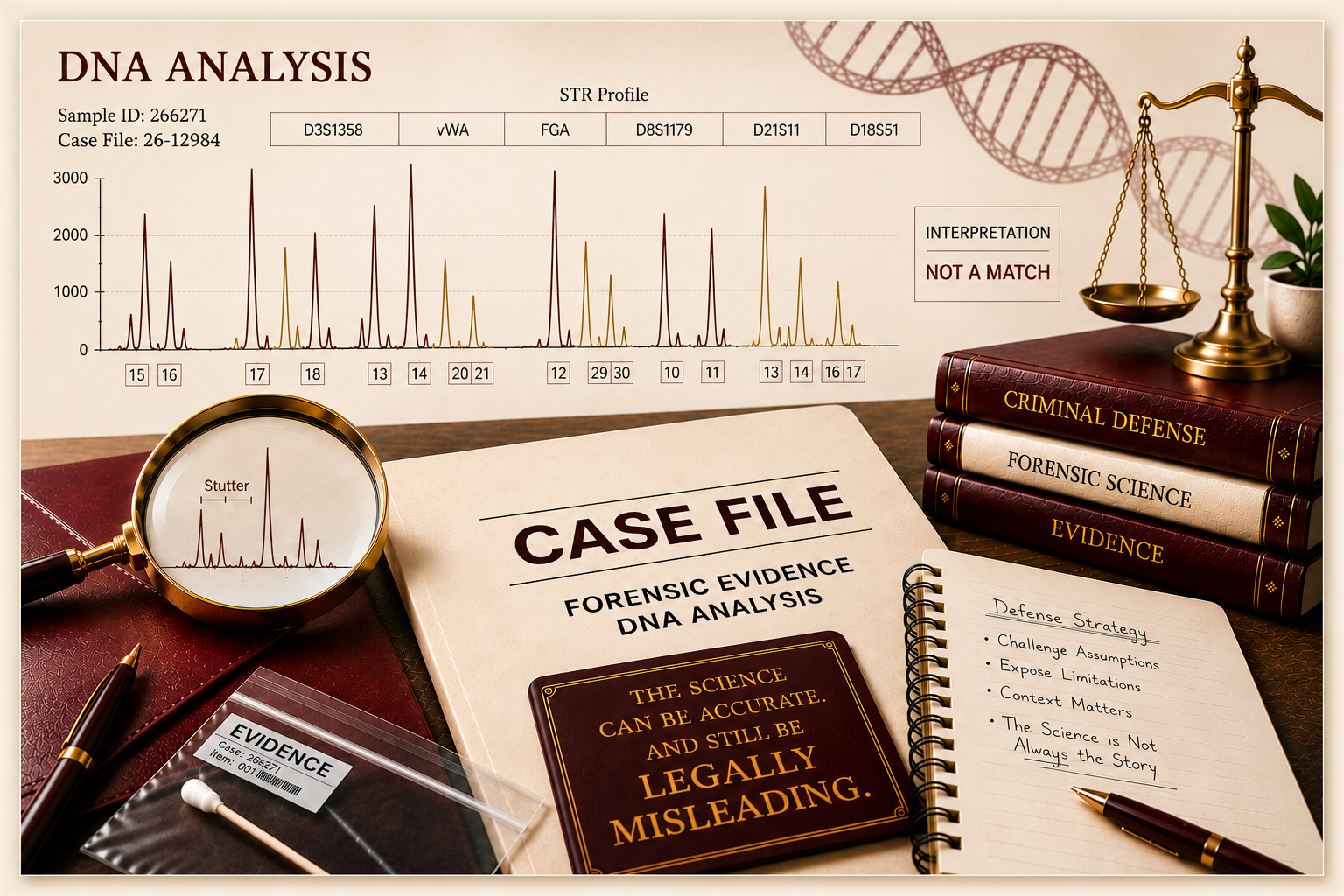
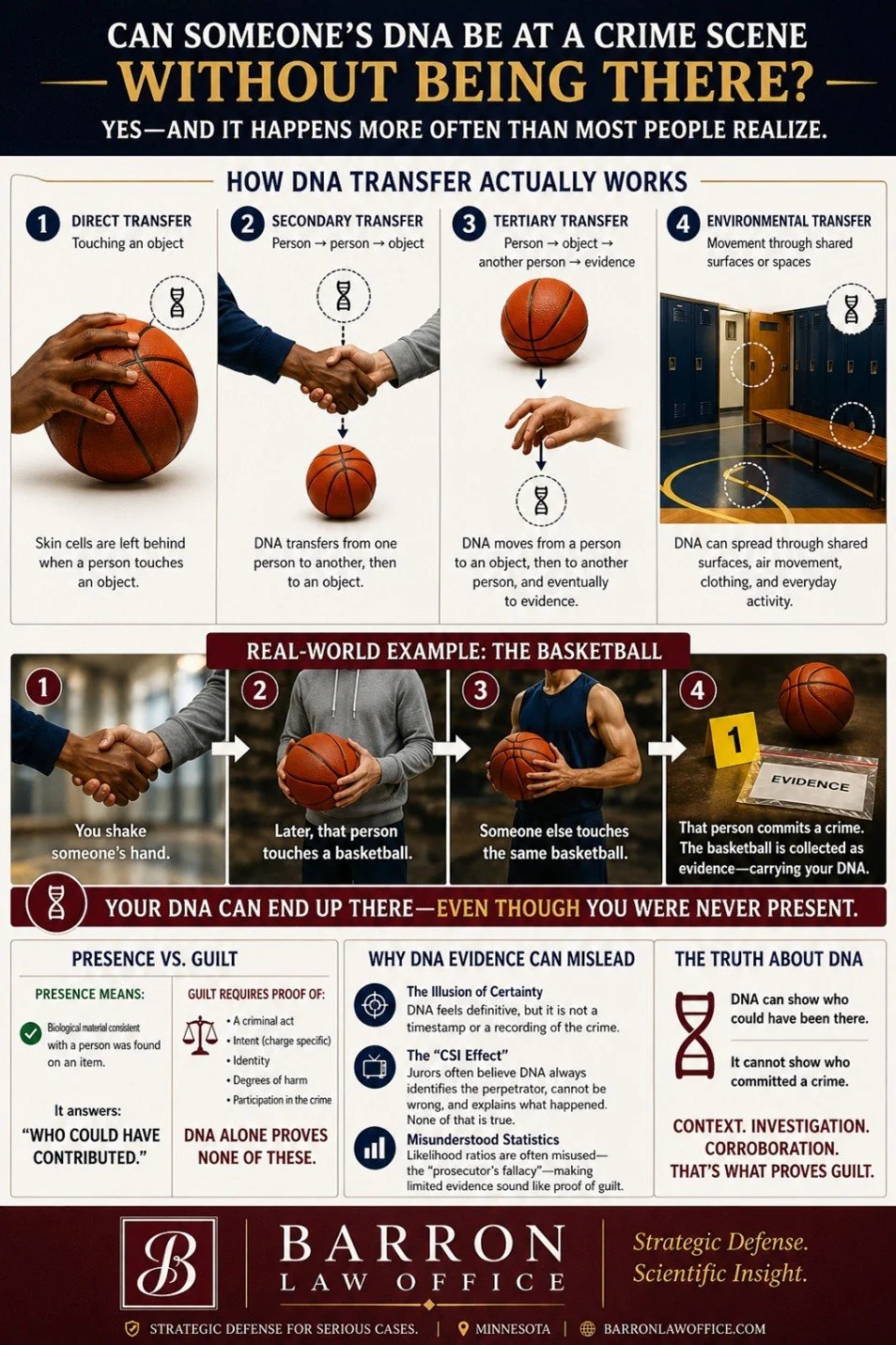
Does Touch DNA Prove Someone Touched the Object?

Understanding What Touch DNA Really Shows — and What It Doesn’t — in Minnesota Criminal Cases When jurors hear that someone’s DNA was found on an object connected to a crime, a common assumption is that the person must have touched that object during the crime. That assumption is rooted in decades of television dramas,…

DNA in Drug Crimes: When Is DNA Used—and When Is It Misused?

I. Introduction: Why DNA Is Showing Up in Drug Cases at All For decades, drug crimes were understood—by investigators, attorneys, and courts alike—as fundamentally non-biological offenses. Unlike violent crimes involving bloodshed, sexual assault, or physical struggle, narcotics cases traditionally centered on contraband itself, not the biology of the people allegedly connected to it. The core…

Understanding DNA Evidence, Its Use in Minnesota Courts, and the Defense Role

Forensic DNA evidence is one of the most important scientific tools used in modern criminal investigations. DNA — short for deoxyribonucleic acid — is often described as a genetic blueprint because it contains the biological instructions that determine many of a person’s inherited characteristics. Nearly every cell in the human body carries the same DNA,…

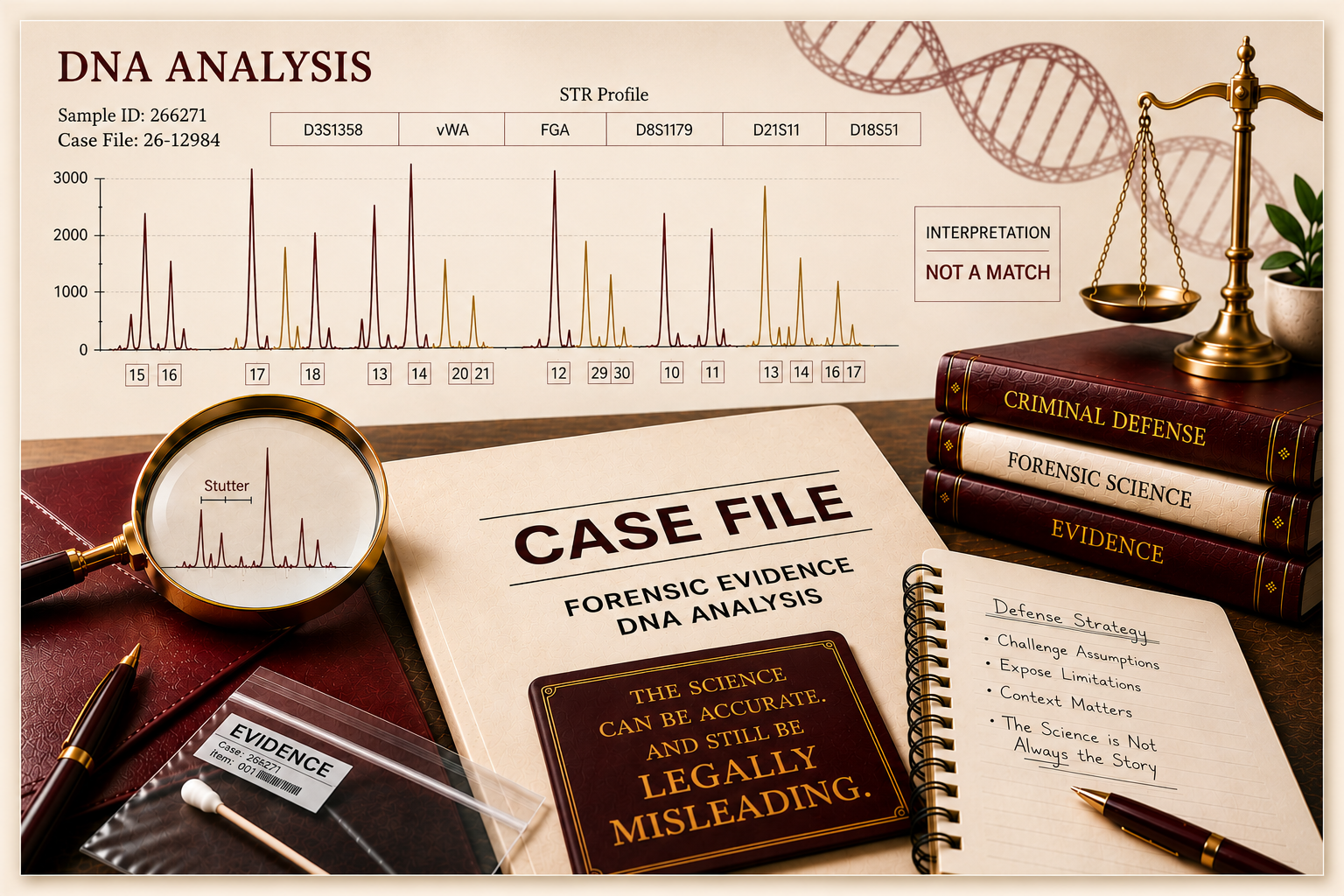
What Does a DNA Match Actually Mean in a Criminal Case?

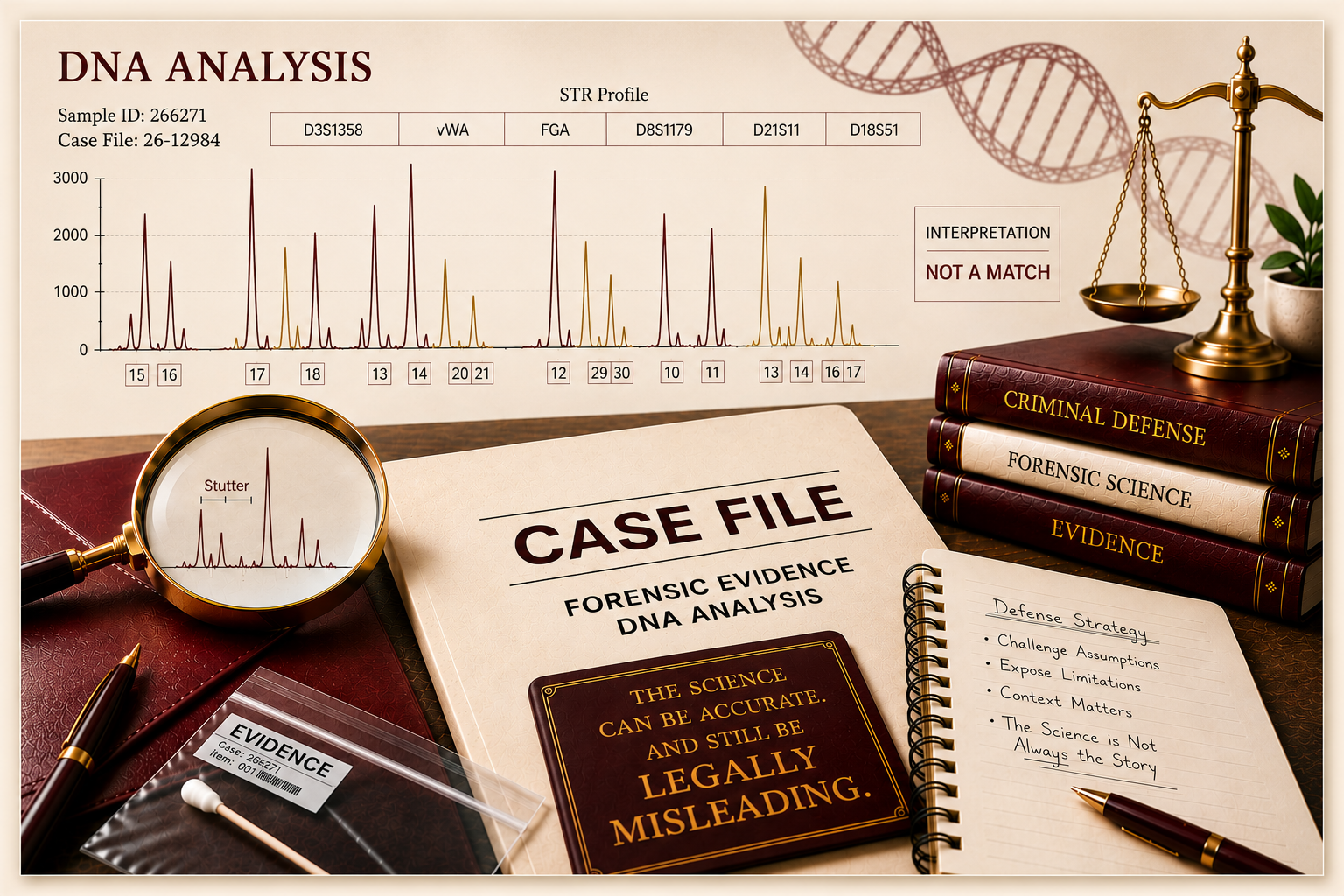
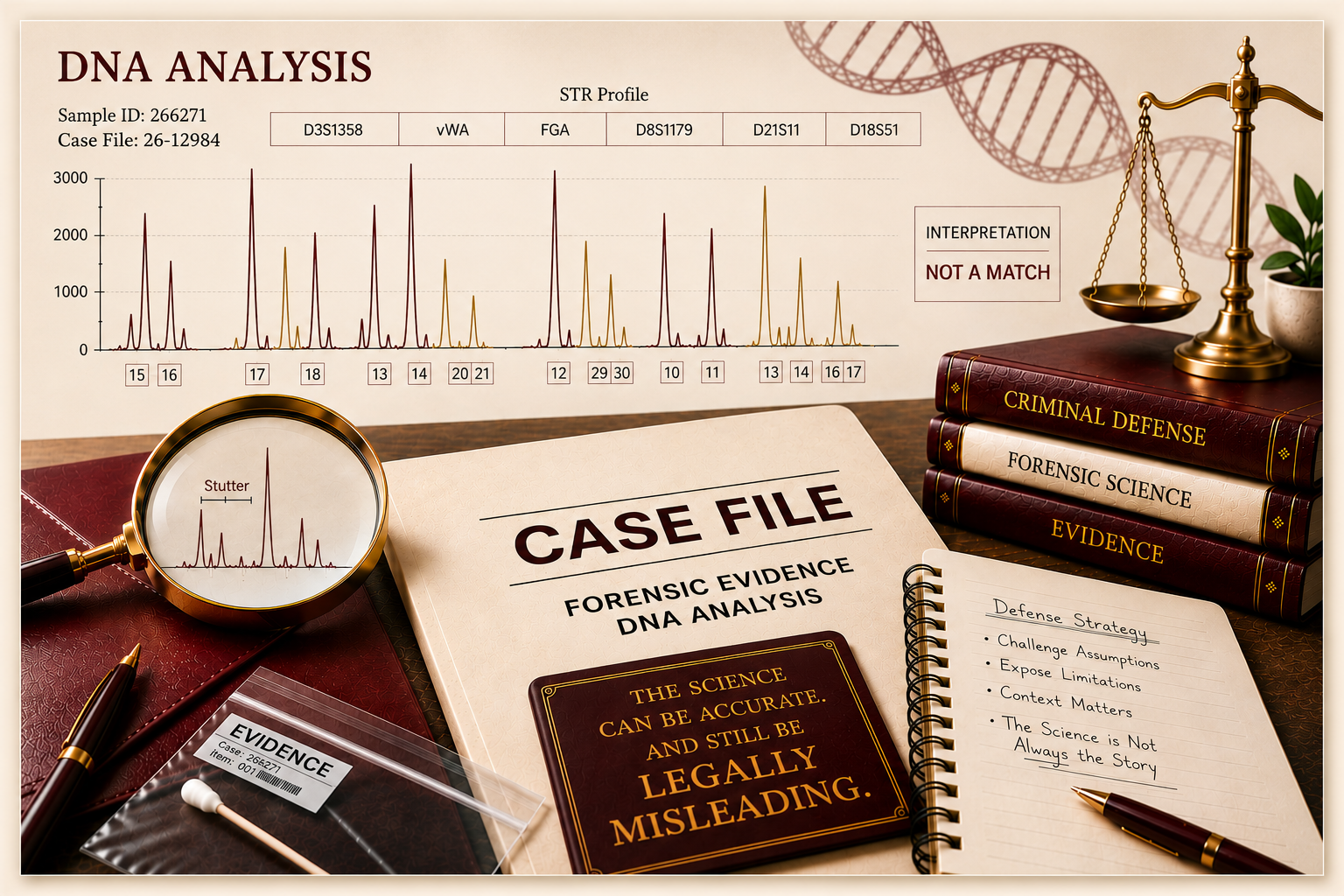
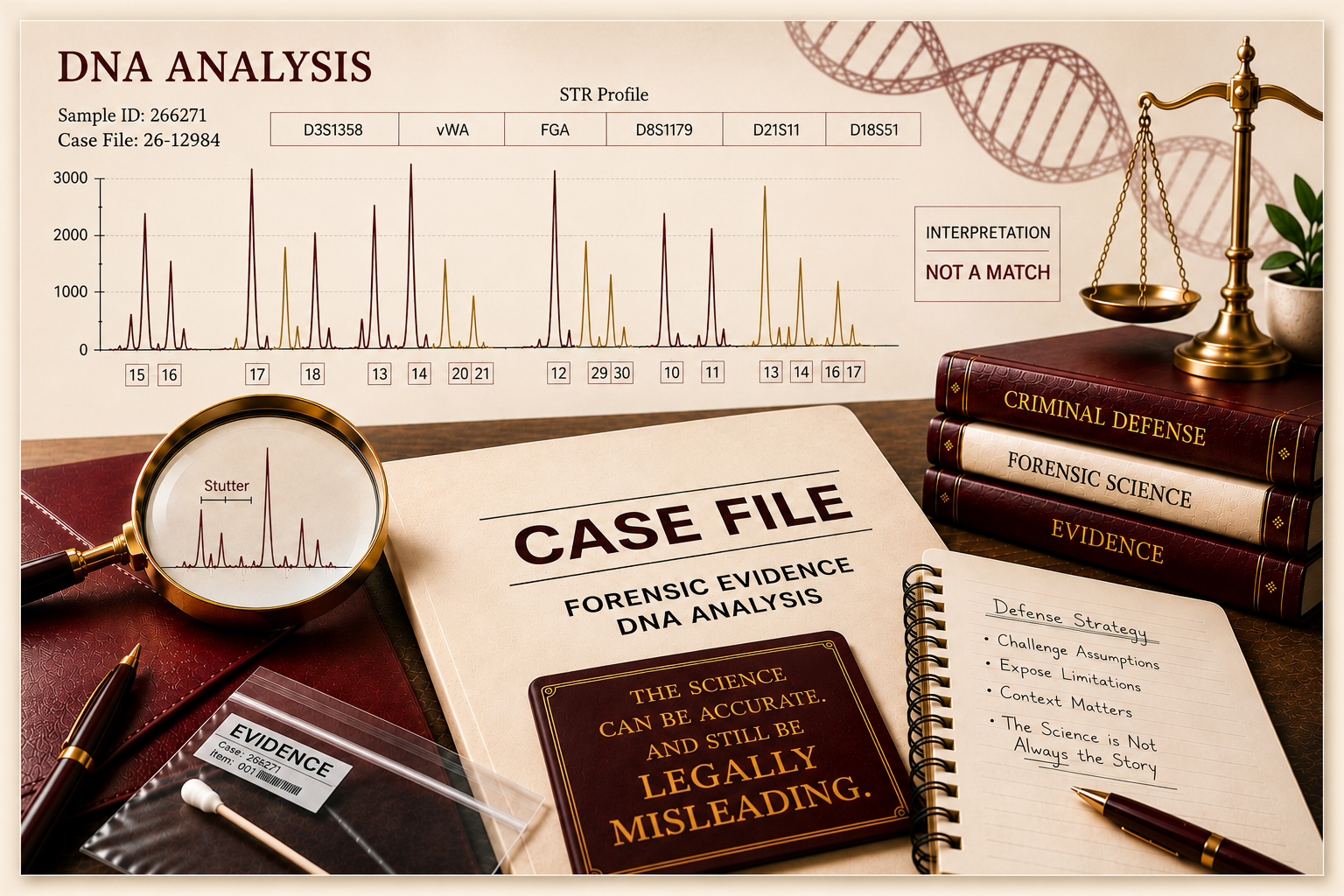
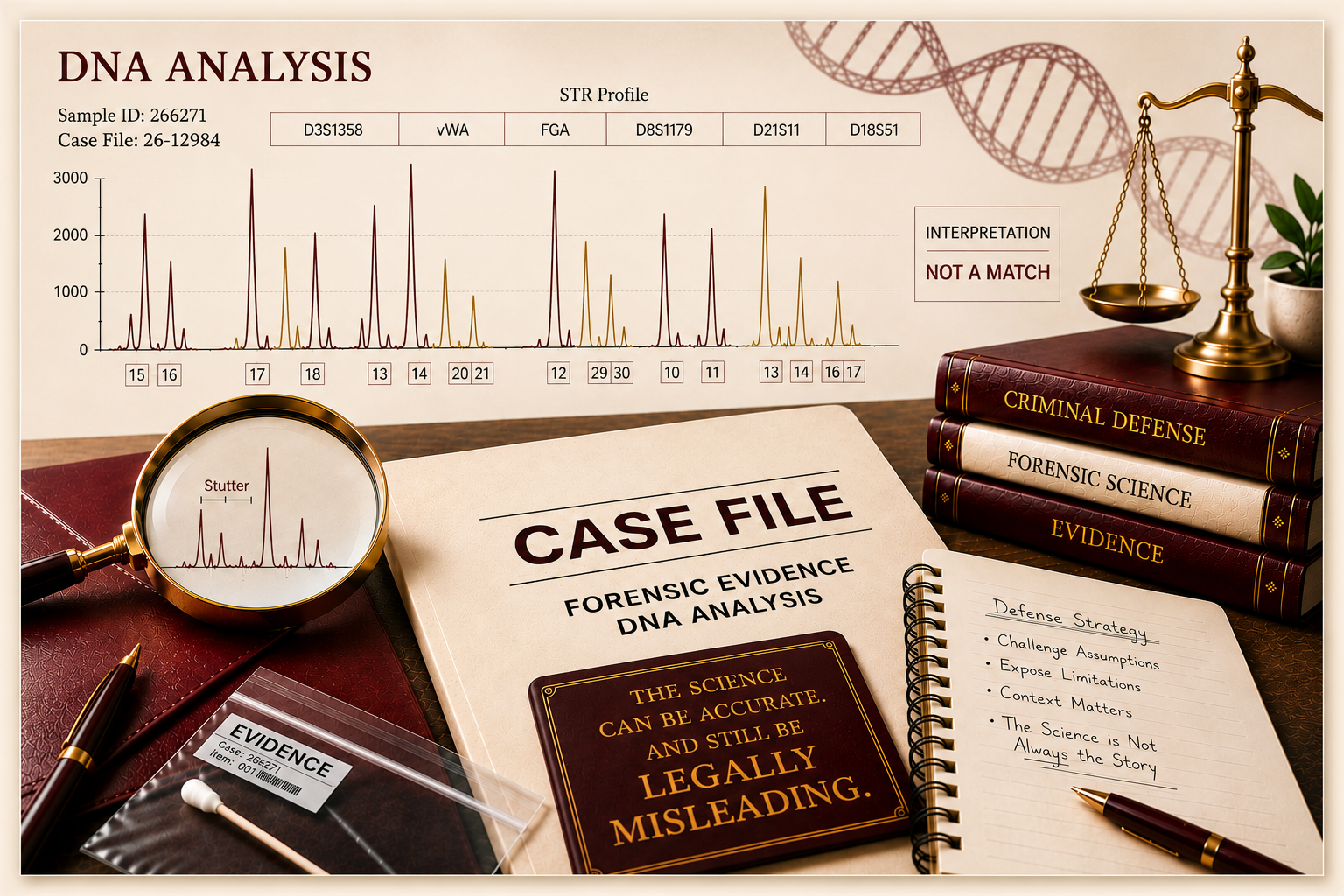
“The defendant’s DNA matched the evidence.” Jurors hear this line and, in an instant, the case feels over.Years of television, podcasts, and true-crime documentaries have trained us to believe that a DNA match is the gold standard of proof. It sounds scientific. Certain. Objective. If DNA is unique to every person, then a “match” must…

What Happens After a DWI Arrest in Minnesota?

Getting arrested for a DWI in Minnesota can be overwhelming, but knowing what happens next is essential to protecting your rights and future. From the moment of arrest, a series of legal, administrative, and personal consequences begin to unfold quickly. You may face license suspension, criminal charges, court appearances, and even vehicle impoundment. Understanding each…

Should You Voluntarily Take a DNA Test if Police Ask?

A Nationwide, Client-Protective Guide from a Criminal Defense Perspective If police ask you for a DNA sample, should you say yes? This question arises every day across the United States—in police stations, during roadside encounters, at homes, and in so-called “voluntary” interviews. It is often presented as routine, cooperative, and risk-free. In reality, it is…

What Is DNA Serology Testing?

A Plain-English Guide for Criminal Defense Clients When people hear the words DNA evidence, they often imagine a laboratory pulling a clean genetic profile from a single drop of blood and instantly identifying the right person. Television and movies have reinforced the idea that DNA evidence is always precise, conclusive, and virtually impossible to challenge….

Understanding Protective Orders in Minnesota

Understanding Protective Orders in Minnesota: How to Get, Types, and Legal Rights Protective orders in Minnesota are civil court orders designed to prevent domestic violence, harassment, and firearm-related risks by imposing restrictions such as no-contact, stay-away, and weapons prohibitions. This article explains who can seek a protective order, the primary order types (Order for Protection,…

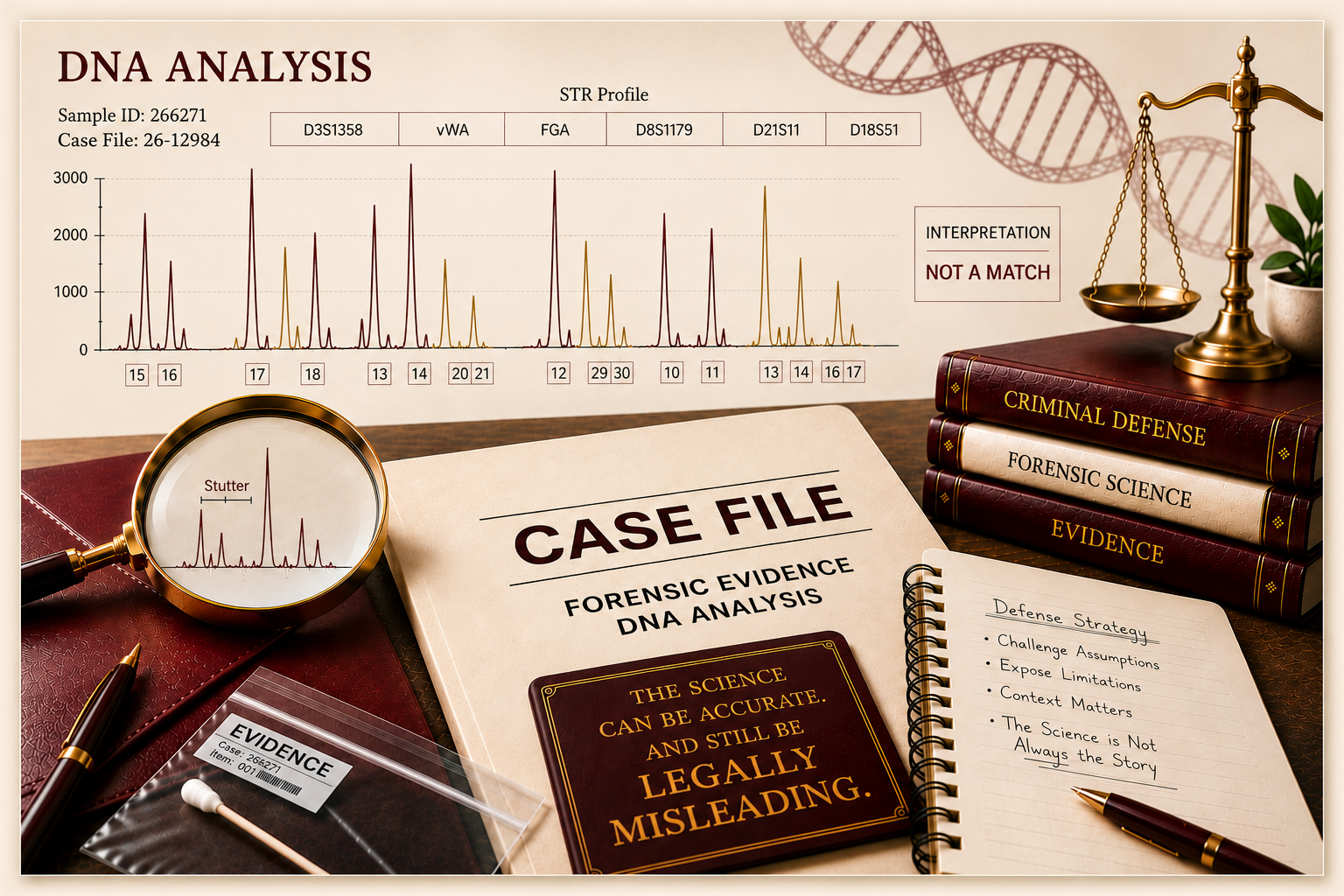
Challenging DNA Evidence in Court: Defense Tactics That Matter

DNA evidence is often viewed as definitive proof in criminal cases, but it is not immune to error or misuse. While DNA can be a powerful investigative tool, its reliability depends on proper collection, handling, testing, and interpretation. Mistakes at any stage can lead to misleading results that unfairly impact a case. Challenging DNA evidence…

Understanding the Difference Between Murder and Manslaughter

Understanding the Difference Between Murder and Manslaughter: Key Legal Definitions and Intent Explained Homicide is the broader legal category encompassing the unlawful killing of another person, and understanding the line between murder and manslaughter determines not only criminal liability but also the severity of penalties and defense strategies. This article explains how mens rea (mental…

Understanding Statutory Rape Laws and Penalties

Minnesota Statutory Rape Laws & Penalties — What You Need to Know to Build an Effective Defense In Minnesota, what people commonly call “statutory rape” is prosecuted under the state’s criminal sexual conduct (CSC) laws. The statutes focus on age thresholds as much as on consent, so knowing how Minnesota defines CSC, how the degrees…

The Problems With Touch DNA and Low-Template DNA in Criminal Cases – A Guide From a Minnesota Criminal Defense & Forensic Attorney

Touch DNA and low-template DNA (also called low-copy-number DNA) have become increasingly common in criminal prosecutions over the past two decades. The premise sounds powerful: investigators can recover DNA from objects that were merely touched or brushed, and labs can amplify traces so small that they contain only a handful of cells. Prosecutors often present…

10 Questions to Ask Your Criminal Defense Attorney if DNA Evidence Is Being Used in Your Case

DNA evidence is one of the most powerful tools used in modern criminal investigations. It is often portrayed as infallible — a silver bullet that can conclusively tie someone to a crime scene or prove their innocence. But the truth is more complicated. DNA evidence can be mishandled, misunderstood, overinterpreted, or even misrepresented. And jurors…

Defending Against False Accusations

Defending Against False Accusations: Legal Defense Strategies and Expert Lawyer Help False accusations occur when someone is wrongly alleged to have committed a crime, and defending against them requires immediate, strategic legal action to protect rights and reputation. This article explains what false accusations are, how they can affect your life, and the practical steps…

Understanding Minnesota’s Self-Defense Laws

Understanding Minnesota’s Self-Defense Laws: Key Principles, Legal Doctrines, and User Rights Self-defense under Minnesota law permits individuals to use force, including deadly force in narrow circumstances, to protect themselves or others when faced with an imminent threat. This article explains how Minnesota defines reasonable and justifiable force, how statutes and recent case law shape jury…

Examples of Successful Criminal Defense Cases

Examples of Successful Criminal Defense Cases: Proven Strategies and Notable Victories Criminal defense case studies document how attorneys convert complex facts, forensic reports, and procedural tools into favorable criminal defense results for clients. This article examines notable victories and anonymized case studies to show which defense strategies tend to produce dismissals, reductions, acquittals, or successful…

Understanding Prostitution Laws and Penalties

Understanding Prostitution Laws and Penalties: Minnesota State Laws, Defenses, and Legal Consequences Prostitution and solicitation laws in Minnesota define specific criminal acts, set penalties, and create legal risks that can affect employment, housing, and civil rights. This article explains how Minnesota statutes and related federal laws classify prostitution, solicitation, pimping, and pandering, and it identifies…

Understanding Aggravated Assault Charges

Understanding Aggravated Assault Charges: Definition, Penalties, and Legal Defense in Minnesota Aggravated assault in Minnesota is a serious criminal offense that elevates certain assaults based on weapon use, intent, or the presence of serious bodily harm; understanding its legal contours is essential for anyone facing or advising on these charges. This article explains what Minnesota…

What The Noblis DNA Mixture Study Means For Your Case: Insights From A…

What the Noblis DNA Mixture Study Means for Your Case: Insights from a DNA Criminal Defense Attorney What the Noblis DNA Mixture Study Means for Your Case: Insights from a DNA Criminal Defense Attorney What the Noblis DNA Mixture Study Means for Your Case: Insights from a DNA Criminal Defense Attorney More Blog Posts DNA…

Cognitive Bias in Forensic Science: How It Can Affect Your Criminal Defense…

Cognitive Bias in Forensic Science: How It Can Affect Your Criminal Defense More Blog Posts When most people hear the term forensic science, they think of hard, objective facts—DNA matches, fingerprints, ballistics, and digital evidence that seem indisputable. On television, forensic experts are portrayed as neutral scientists who simply “follow the evidence.” In reality, forensic…

The victim wants the case dropped, can’t this just go away?…

The victim wants the case dropped, can’t this just go away? More Blog Posts It’s one of the most common questions a criminal defense attorney in Southwestern Minnesota hears: “The victim doesn’t want to press charges anymore—can’t this whole thing just go away?” At first glance, that seems like a fair assumption. If the person…

Criminal Defense

Forensic Law

Contact Barron Law Office: Expert Criminal Defense & Forensic Law Help

When you have been charged with a crime, you do not have to face the charges on your own, nor do you have to pay the maximum consequences.

If you are facing a criminal matter or a family law matter, we can help you find a satisfactory resolution to your case. From divorce and child custody issues to theft and DWI, you will have a powerful and knowledgeable advocate in your corner. To learn what we can do for you, call 507-822-5735to schedule a free consultation.